
The House Always Wins? Rethinking Luck, Skill, and Strategy in iGaming
Every gambler has heard the phrase, usually from a smug friend who just watched them lose a hand of blackjack: the house always wins. It sounds like a warning, but it is actually a description of a business model, not a prophecy. The house edge is a statistical constant baked into every game on a casino floor and every slot reelset on a server rack. Understanding how that edge works, and where it does not, is the difference between playing for entertainment and playing like a person who actually knows what is happening to their money.
The Math Behind the Curtain
Start with the simplest number: the house edge. On a European single-zero roulette wheel, the house edge is 2.7 percent. On the American double-zero version, it jumps to 5.26 percent. That difference is not trivia. Over a thousand $10 spins, you are expected to lose roughly $270 at a European table and $526 at an American one. Same game, same chip stack, nearly double the bleed.
Slots work differently because you cannot see the math, but the concept is the same. A modern video slot with a 96 percent return-to-player (RTP) gives back $96 for every $100 wagered over millions of spins. That 4 percent is the house edge, and it is the reason slot floors generate the bulk of casino revenue worldwide, typically somewhere between 65 and 80 percent of the total.
- Blackjack with basic strategy: house edge around 0.5 percent.
- Baccarat banker bet: roughly 1.06 percent.
- Craps pass line with odds: under 1 percent.
- Keno: often 25 to 35 percent, one of the worst bets on the floor.
The takeaway is not that you should avoid slots. It is that games are not interchangeable, and the difference between a 1 percent and a 30 percent edge compounds fast over a session.
Poker Is the Exception Nobody Talks About
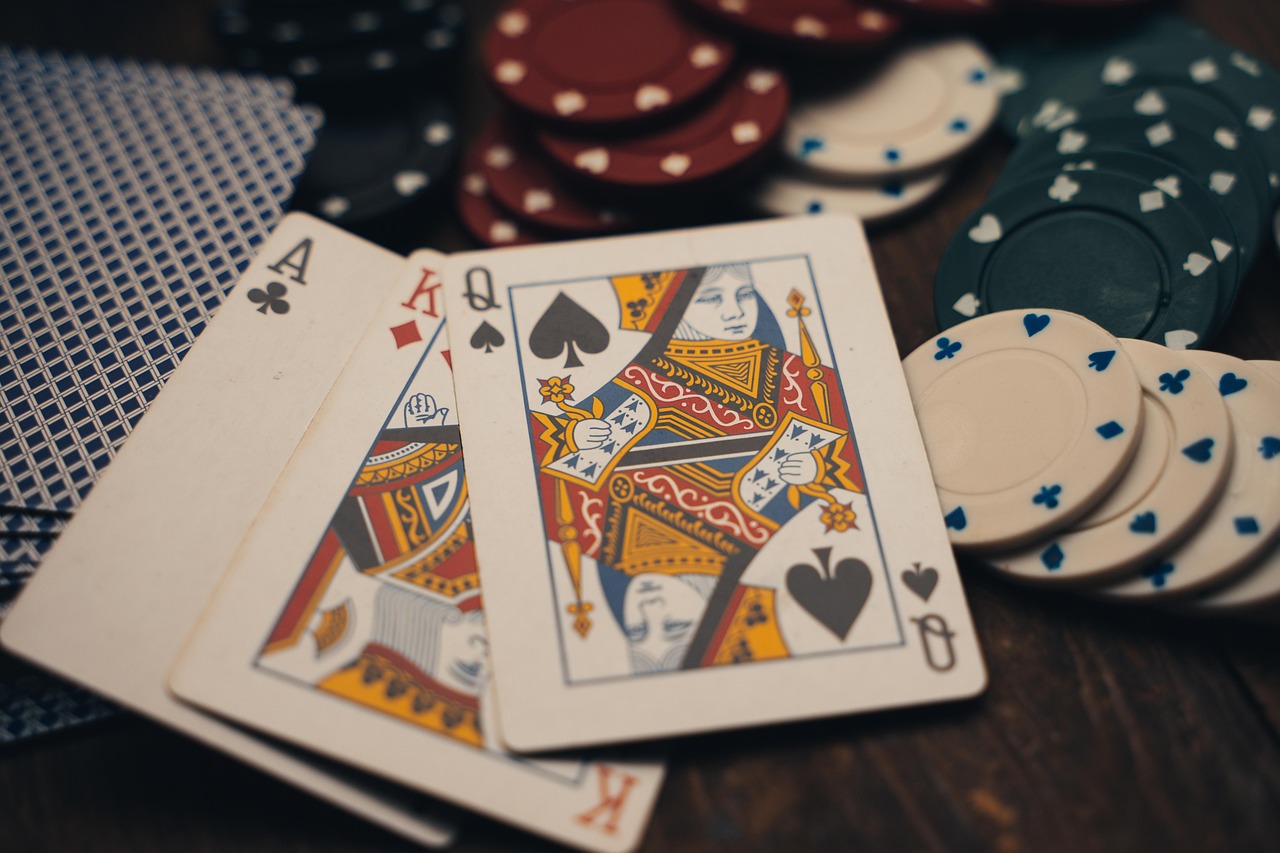
Poker occupies a strange place in iGaming because you are not playing against the house. You are playing against other people, and the operator takes a rake, usually 5 percent of the pot capped at a few dollars. That means poker is the one major casino game where a skilled player can have a genuine long-term edge.
But skill cuts both ways. In a low-stakes online cash game, the rake can quietly swallow your winnings if you play too many marginal hands. A player who wins 4 big blinds per 100 hands before rake might see that drop to 1.5 after it. This is why serious players track their win rate in bb/100, not their session results, and why bankroll management matters more in poker than anywhere else in gaming. สล็อตเว็บตรง offers a practical breakdown of the topic.
If you are new to the game, resist the urge to jump into no-limit hold'em cash tables with your entire deposit. Start with micro-stakes, play fewer hands, and treat the first month as tuition. The players who survive are rarely the most aggressive. They are the ones who fold when they are beaten.
Slots, Volatility, and the Myth of Due Wins
Here is the fact that surprises most casual players: slot spins are independent events. A machine that has not paid out in three hours is not "due." It has no memory. The random number generator that determines the outcome of your next spin does not know or care what happened on the last thousand.
What does change between slots is volatility. A low-volatility slot pays small amounts often, giving you longer playtime on the same bankroll. A high-volatility slot, the kind that advertises 50,000x max wins, will drain your balance in a steady trickle punctuated by rare explosions. Neither is better. They just suit different temperaments and bankrolls.
Two practical guidelines worth remembering:
- Check the RTP before you play. It is listed in the game's info screen. Anything below 94 percent is stingy by modern standards.
- Set a loss limit before your first spin and treat it as spent money. The moment you start chasing, the math turns from entertainment to financial damage.
Bonus features and free spins complicate the math further. A 100 percent match bonus with a 40x wagering requirement and a maximum cashout cap is not free money. It is a contract, and you should read the terms as carefully as you would a lease.
Live Dealer Games and the Human Element
The rise of live dealer tables changed online casinos more than any single technology in the past decade. Real dealers, real cards, streamed in real time, with betting limits that range from $1 to $100,000. It combines the convenience of your couch with the social texture of a physical casino.
The trade-off is speed. Live blackjack runs slower than its digital counterpart because a human is physically dealing, and slower games mean less money wagered per hour. For a disciplined player, that is actually an advantage. It stretches a bankroll and reduces the number of decisions you make under pressure.
It also introduces new etiquette. Do not blame the dealer for a bad shoe. Do not slow-play a live table to argue about a rule. And if you are going to chat, remember there is a real person on the other end of the camera who has heard every bad beat story a hundred times before.
Where the Smart Money Actually Goes
If there is one piece of advice that separates recreational players from people who treat iGaming as a long-term hobby, it is this: decide in advance what the money is for. Entertainment spending and investment are different categories, and mixing them is where people get hurt.
That means a separate budget, a fixed session length, and a willingness to walk away. It also means accepting that no strategy, no system, and no hot streak changes the underlying math of a negative-expectation game. The only permanent edge a player has is in poker, sports betting with genuine information, and the discipline to stop.
None of this is meant to be a sermon. Casino games are engineered to be fun, and they are good at it. The lights, the sounds, the near-misses, the adrenaline of a big multiplier landing on the final reel. That is the product, and there is nothing wrong with buying it. The problem starts when you forget you are a customer and start believing you are the house. The house always wins because it designed the rules. The player's job is to enjoy the game without pretending otherwise.
tag: iGaming

James Hartley Author
Learn which cedar grades suit benches, tables and planters, and how to protect the timber from damp British weather.
YOU MAY ALSO LIKE
Choosing Durable Cedar Wood for Garden Furniture
Sep 22
10Use pinecones, paper stars and beeswax candles to dress a festive table without spending much or creating waste.
read more
Simple Scandinavian Christmas Table Decorations to Make
Sep 16
10Discover compact conifers, heathers and box alternatives that provide structure and colour throughout every season in modest plots.
read moreInteriors
-

ERRIC CATONA
Start with green wood, a sharp knife and patient strokes to make a useful spoon for your kitchen.
May 19, 2016 at 5.12 pm
Reply
ERRIC CATONA
Plan ventilation, insulation and safe stove placement before constructing a small garden sauna for restful evenings all year round.
May 19, 2016 at 5.12 pm
Reply -
ERRIC CATONA
Identify safe hedgerow fruits and turn them into jams, cordials and sauces using simple traditional methods at home.
May 19, 2016 at 5.12 pm
Reply
Garden
Your email address will not be published.