
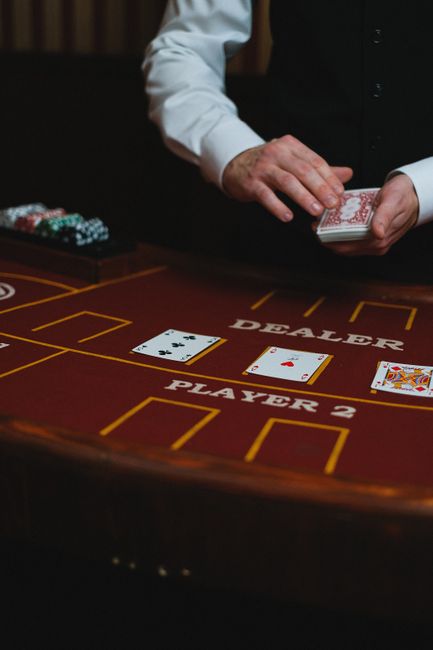
The House Always Wins? Not If You Know These iGaming Truths
Every seasoned gambler has heard the phrase "the house always wins." It's repeated so often that most players accept it as an unbreakable law of the universe. But here's the thing: the house edge is real, yet it isn't uniform. It shifts dramatically depending on whether you're spinning a slot machine, sitting at a poker table, or placing a sports bet. Understanding where the math tilts against you — and where it actually tilts toward you — is the difference between playing blind and playing smart.
This isn't about grinding out a guaranteed profit. That doesn't exist. It's about knowing which games give you the best shot, how volatility shapes your bankroll, and why some of the most popular bets on the floor are statistically terrible ideas. Let's dig into the numbers.
Slots: The Most Misunderstood Machines on the Floor
Slot machines are the cash cows of every casino. They generate roughly 70–80% of all gaming revenue on a typical casino floor, according to industry reports. That tells you something important: the margin is wide enough to survive an awful lot of lucky players.
RTP, or return to player, is your key number here. A slot with 96% RTP returns $96 for every $100 wagered over millions of spins. That sounds reasonable until you realize online slots often sit between 94% and 97%, while physical machines in some jurisdictions dip as low as 85–88%. If you're playing a land-based slot with 87% RTP, you're bleeding $13 per $100 wagered — far worse than most other games.
Volatility matters just as much as RTP:
- Low volatility — frequent small wins, gentle bankroll drain. Good for long sessions on a modest budget.
- Medium volatility — balanced risk and reward. The sweet spot for most casual players.
- High volatility — rare but massive payouts. A 96% RTP high-volatility slot can eat $300 before paying anything back.
Newer doesn't mean better, either. Some of the highest-RTP slots online hover around 97%+, but many flashy "Megaways" titles sit closer to 94–95%. Always check the paytable info screen before committing real money.
Blackjack: Where Skill Actually Shrinks the House Edge
Blackjack is the rare casino game where the player's decisions meaningfully move the math. Played with perfect basic strategy, a standard 6-deck game with dealer standing on soft 17 gives the house roughly a 0.4% edge. That's razor thin — thinner than just about anything else on the gaming floor.
Make bad decisions, though, and that edge balloons. Hitting on a hard 17 against a dealer's 6, for example, costs you roughly 4% in expected value on that hand alone. Over hundreds of hands, sloppy play turns a 0.4% game into a 2.5% game without you even noticing.
A few concrete basics worth memorizing:
- Always split aces and 8s.
- Never split 10s or 5s.
- Double down on 11 against anything except an ace.
- Stand on 16 against a dealer 2–6, hit against 7 and up.
Card counting can theoretically flip the edge in your favor, but modern casinos use continuous shuffling machines and software tracking to neutralize it. For 99.9% of recreational players, basic strategy is the real edge. We found สล็อตเว็บตรง to be a handy reference here.
Poker: The Only Game Where You Beat People, Not the House
Poker flips the entire model. You're not fighting a mathematical house edge — you're competing against other players, and the casino simply takes a rake. In low-stakes live cash games, that rake typically runs 5% up to a $5–$6 cap per pot. Online, it's usually 4.5–5% with lower caps.
That means your profitability depends almost entirely on how you compare to your table. In a $1/$2 game against recreational players who limp every hand and chase draws, a disciplined tight-aggressive approach can generate a meaningful hourly rate. In a $5/$10 game against pros, the rake becomes a mountain you can't climb.
Bankroll management is non-negotiable:
- Cash games — 20 buy-ins minimum, ideally 30. For $1/$2, that's $4,000–$6,000.
- Tournaments — 50–100 buy-ins, because variance is brutal. A 100-buy-in downswing is normal, not a sign you're terrible.
- Move down when your roll dips below 20 buy-ins. Ego kills bankrolls faster than bad beats.
Sports Betting: The Quiet King of iGaming Growth
Sports betting has exploded since the U.S. Supreme Court struck down the federal ban in 2018. By 2024, Americans legally wagered over $120 billion annually — and that figure keeps climbing. The standard vig on a point spread is -110 on both sides, meaning you need to win 52.4% of your bets just to break even.
That 2.4% margin above 50/50 sounds small, but it's relentless. A bettor who wins 51% of picks still loses money over a thousand bets. The only paths to real profitability are aggressive line shopping (finding -105 or better), exploiting soft markets before sportsbooks adjust, and avoiding parlay traps — which carry some of the worst effective house edges in all of gambling, often exceeding 20%.
Props, futures, and live in-play markets tend to have softer lines early in the season or in niche sports, which is why sharp bettors flock to those areas. Meanwhile, popular NFL moneylines on Sunday afternoons are priced razor-sharp.
Bonuses, Rakeback, and the Underrated Value of Chasing Edge
One thing novice players overlook: promotions and loyalty programs can meaningfully move your effective RTP. Casino bonuses with 30x wagering requirements often aren't worth the grind, but cashback deals, deposit matches with low playthrough, and poker rakeback (often 20–40% at reputable rooms) genuinely shrink the house's cut.
Do the math before claiming anything. A 100% deposit match up to $500 with 40x wagering on slots at 95% RTP looks generous, but the expected value is often negative unless the game holds up well during the grind. Read the terms. Always.
The Bottom Line Is Really a Simple Question
There's no secret system that beats the house. But there's a huge gap between playing a 0.4% blackjack game with basic strategy and hammering high-variance slots at 88% RTP with no plan. The players who last — and occasionally walk away ahead — are the ones who treat iGaming like a hobby with real costs, not a lottery ticket. Pick games where the math isn't stacked twenty deep against you. Track your sessions. Walk when the fun stops, not when the bankroll hits zero. The house may always hold a slight edge, but you get to decide how much that edge costs you.
tag: iGaming

James Hartley Author
Learn which cedar grades suit benches, tables and planters, and how to protect the timber from damp British weather.
YOU MAY ALSO LIKE
Choosing Durable Cedar Wood for Garden Furniture
Sep 22
10Use pinecones, paper stars and beeswax candles to dress a festive table without spending much or creating waste.
read more
Simple Scandinavian Christmas Table Decorations to Make
Sep 16
10Discover compact conifers, heathers and box alternatives that provide structure and colour throughout every season in modest plots.
read moreInteriors
-

ERRIC CATONA
Start with green wood, a sharp knife and patient strokes to make a useful spoon for your kitchen.
May 19, 2016 at 5.12 pm
Reply
ERRIC CATONA
Plan ventilation, insulation and safe stove placement before constructing a small garden sauna for restful evenings all year round.
May 19, 2016 at 5.12 pm
Reply -
ERRIC CATONA
Identify safe hedgerow fruits and turn them into jams, cordials and sauces using simple traditional methods at home.
May 19, 2016 at 5.12 pm
Reply
Garden
Your email address will not be published.