
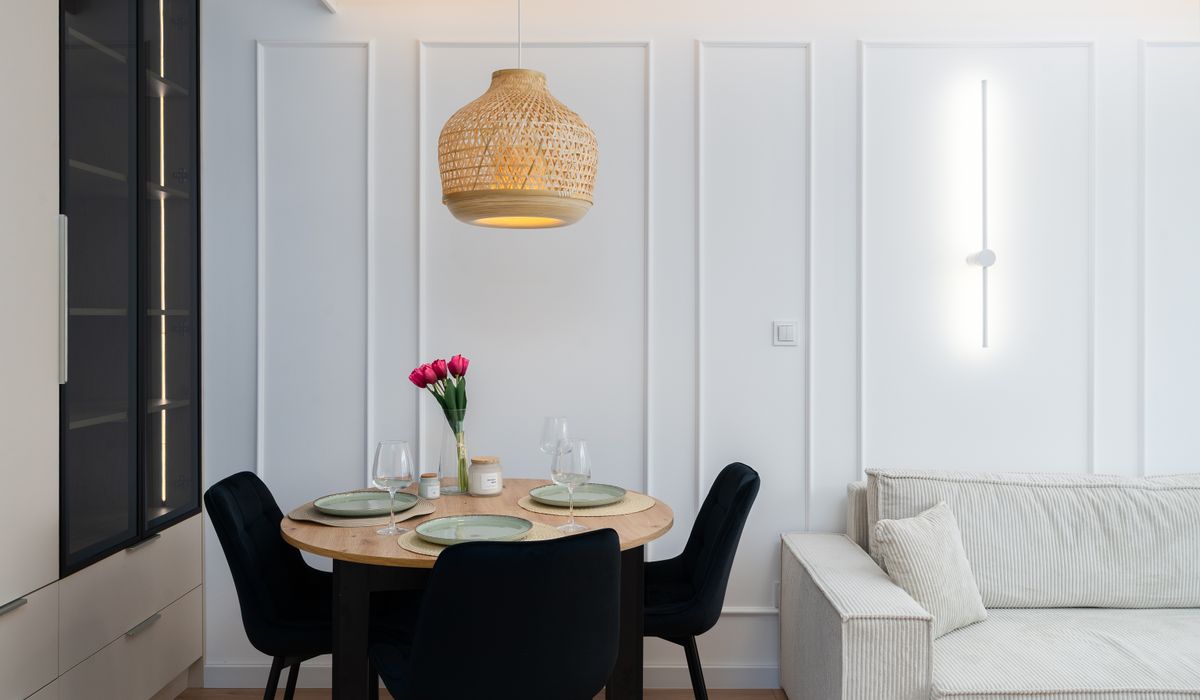
How to Create a Cosy Nordic Living Room
Why Nordic Style Suits a British Home
Nordic interiors were never really about minimalism for its own sake. They grew out of long, dark winters and small rooms, and the answer was never stark white emptiness: it was warmth, texture and light used cleverly. That is precisely why the look translates so well to a Victorian terrace in Leeds or a 1970s semi in Cardiff. We share the same problem, after all — a sun that disappears by half past three in December.
The good news is that a cosy Nordic living room is not expensive to achieve. It is built from layers: wool, linen, wood, candlelight and a restrained palette. Get those right and the room will feel calm and inviting even on the greyest February afternoon.
Start With the Light, Not the Furniture
Nordic homes are lit like film sets — several small pools of light rather than one bright ceiling fixture. Switch off the overhead light in the evening entirely and see how different the room feels.
- Aim for three to five light sources. A floor lamp beside the sofa, a table lamp on a side table, a small lamp on a bookshelf and a couple of candles is plenty for a typical living room.
- Choose warm bulbs. Look for 2700K, ideally dimmable, at around 400–600 lumens. Anything cooler than 3000K will fight the cosiness.
- Shade the glare. Fabric or paper shades in cream, oatmeal or bone diffuse light softly. Metal and glass shades throw it about harshly.
- Put a lamp in the dark corner. The corner you never sit in is usually the one that needs light most.
If you have a bay window, resist the urge to fill it with heavy curtains that stay closed all day. Let in whatever light there is, then add warmth at the edges instead.
Layer Wool, Linen and Sheepskin
Texture is what separates a Nordic room from a sterile one. In a British climate you can genuinely use these things for eight months of the year, so buy well rather than often.
Start with the sofa. A neutral linen or cotton slipcover in oatmeal, stone or soft grey gives you a calm base. Then add:
- A chunky wool throw in undyed cream, charcoal or a muted rust, folded rather than spread, over one arm or the back of the sofa.
- Two or three cushions in mixed textures — a linen square, a wool bouclé, a fine knit — in tonal shades rather than matching prints.
- A sheepskin draped over an armchair or a wooden stool. It adds instant softness and costs far less than replacing furniture.
- A wool rug if you have bare floorboards. Something with a slightly uneven, handwoven look works better than a flat synthetic pile.
Keep patterns minimal. One subtle stripe or a simple geometric is enough; Nordic style relies on texture doing the talking.
Choose a Calm, Layered Palette
The classic Nordic palette is not cold white. It is a stack of off-whites, greys, muted blues and warm browns, with one darker anchor.
Paint walls in a soft off-white or chalky grey, then bring in warmth through wood. Light oak, ash and pale birch are the traditional choices, but a darker walnut or stained pine console table adds depth and stops the room feeling washed out. Black metal details — a lamp base, a picture frame, a curtain rail — give the eye something to rest on.
If you want colour, look to nature: deep forest green, dusty terracotta, slate blue, mustard. Use it in small doses — a cushion, a ceramic vase, a print on the wall — rather than across a whole wall.
Keep the Layout Low and Uncluttered
Nordic rooms feel restful because there is space around things. You do not need to strip the room bare, but you do need to edit.
- Keep furniture low. A low sofa, a low coffee table and a low media unit let light travel across the room rather than being blocked.
- Leave the windowsill fairly clear. One plant, one candle, one small object is enough. Light is the most valuable thing in the room.
- Hide the cables and the clutter. A woven basket for throws, a lidded box for remote controls, a shallow tray for candles — small interventions that make a big difference.
- Leave one wall almost empty. Not every surface needs something on it.
Bring the Outdoors In, Gently
Plants and natural materials are essential to the Nordic look, but restraint matters. A single large specimen — a rubber plant, a fiddle-leaf fig, a monstera — in a simple woven or ceramic pot will do more than a shelf of small ones.
Add other touches of the natural world: a few birch logs in a basket by the fireplace, a stoneware bowl, a linen table runner, a wooden bowl on the coffee table. Dried branches in a tall vase look particularly good from October through to March.
Finally, think about scent. A beeswax candle or a lightly scented diffuser in cedar, pine or smoke completes the effect. Warmth in a Nordic room is not just what you see — it is what you smell, touch and settle into at the end of a dark afternoon.
tag: Interiors

James Hartley Author
Learn which cedar grades suit benches, tables and planters, and how to protect the timber from damp British weather.
YOU MAY ALSO LIKE

Choosing Durable Cedar Wood for Garden Furniture
Sep 22
10Use pinecones, paper stars and beeswax candles to dress a festive table without spending much or creating waste.
read more
Simple Scandinavian Christmas Table Decorations to Make
Sep 16
10Discover compact conifers, heathers and box alternatives that provide structure and colour throughout every season in modest plots.
read moreInteriors
-

ERRIC CATONA
Start with green wood, a sharp knife and patient strokes to make a useful spoon for your kitchen.
May 19, 2016 at 5.12 pm
Reply
ERRIC CATONA
Plan ventilation, insulation and safe stove placement before constructing a small garden sauna for restful evenings all year round.
May 19, 2016 at 5.12 pm
Reply -
ERRIC CATONA
Identify safe hedgerow fruits and turn them into jams, cordials and sauces using simple traditional methods at home.
May 19, 2016 at 5.12 pm
Reply
Garden
Your email address will not be published.